Copper Pipe Brazing: Improving Reliability and Efficiency with Induction Heating
Learn how induction heating improves copper pipe brazing by increasing reliability, efficiency, and joint consistency while reducing cycle time and energy use in industrial applications.
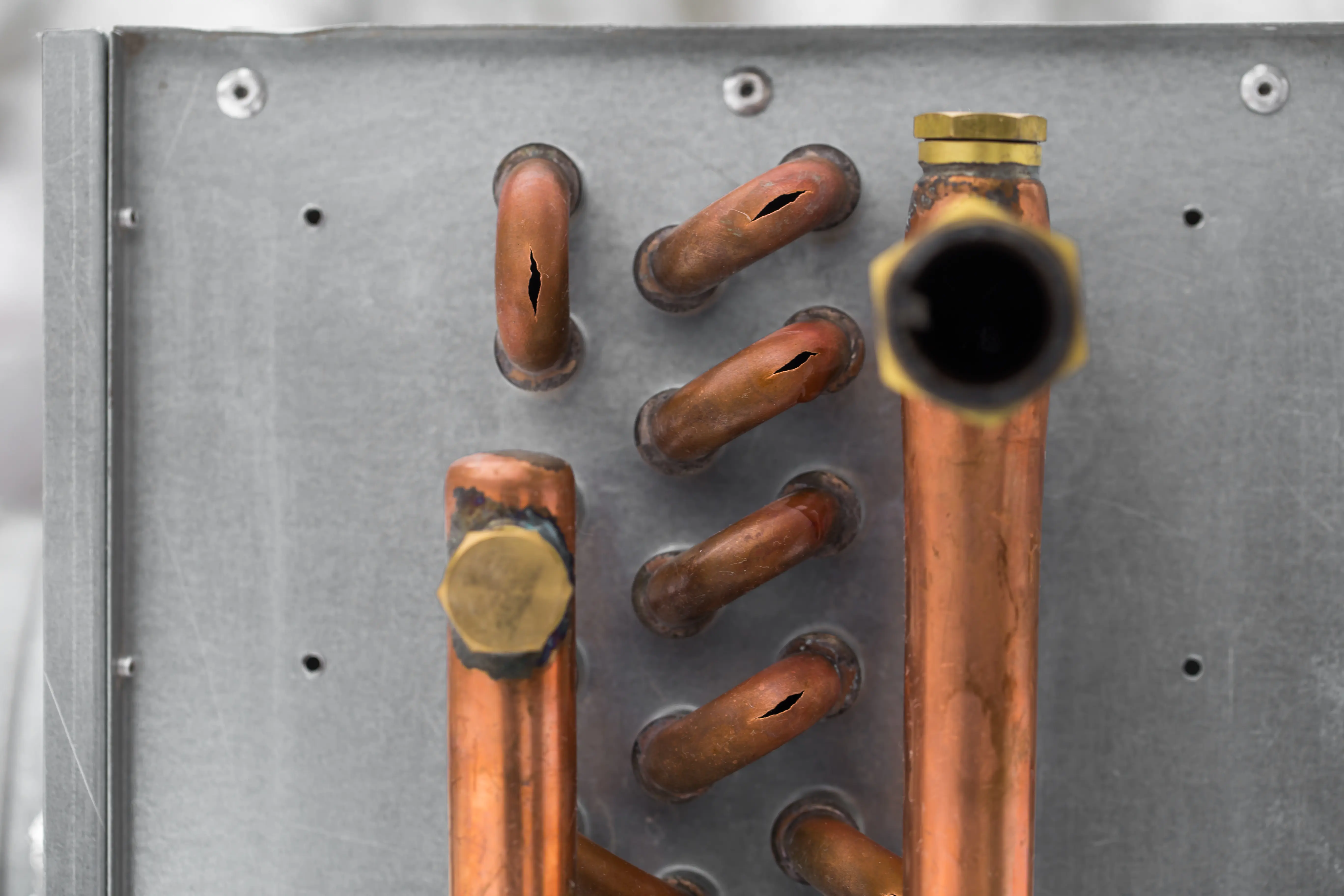
In manufacturing, the integrity of a single joint can determine the success of an entire system. Whether it is an HVAC unit cooling a skyscraper or the cooling infrastructure of a hyperscale data center, copper piping remains the lifeblood of thermal management. Historically, creating these connections relied on the steady hand of a skilled operator and an open flame. However, as production demands increase and tolerance for error decreases, manufacturers are turning to a more precise solution for copper pipe brazing: induction heating.
For manufacturing professionals, the shift from traditional torch brazing to induction brazing represents more than just a change in equipment; it is a shift toward automation, safety, and repeatability. This article explores how induction heating (inductive heating) technology is redefining copper pipe brazing, offering a look at how it compares to traditional methods and why induction heaters are becoming the standard for modern production lines.
I. Introduction: The Advantages of Induction Brazing
Copper pipe brazing is a critical process in industries ranging from HVAC and refrigeration to automotive manufacturing and industrial systems. These systems often operate under high pressure and temperature, meaning every joint must be flawless.
While manual torch brazing has served the industry for decades, it relies on a workforce of skilled tradespeople. In a high-volume production environment, this reliance introduces risks: operator fatigue, inconsistent heating, and the challenge of training new hires to master the 'art' of the torch.
Induction heating addresses these challenges by using electromagnetism to generate heat directly within the workpiece. This results in an induction brazing process that is:
Consistent: Every copper brazing joint receives the exact same amount of energy.
Repeatable: Heating profiles on the induction heater can be programmed and saved.
Efficient: Energy is transferred directly to the copper, reducing waste common in flame-based methods.
As the demand for reliable infrastructure grows, from expanding data center capacity to automotive heat exchanger production, induction solutions are proving essential for scaling copper pipe brazing production without sacrificing quality. High-volume manufacturing environments require thousands of hermetically sealed connections, and many applications specifically demand copper hermetically sealed joints where every connection is critical to system performance and where traditional torch methods cannot deliver the required consistency.
II. What is Copper Pipe Brazing?
To understand induction technology, it helps to first ask: what is brazing, and how does it differ from soldering?
Brazing is a metal-joining process where two or more metal items are joined together by melting and flowing a filler metal into the joint. The key distinction lies in temperature: brazing occurs at temperatures above 450°C (840°F). Soldering, by comparison, occurs at lower temperatures and generally offers lower structural strength.
Why Copper?
Copper is the standard for thermal transfer systems due to its superior thermal conductivity and corrosion resistance. In the copper pipe brazing process, the base metals (pipes) are heated to a specific temperature where the filler metal (often a copper-phosphorus or silver alloy) melts and flows into the gap between the close-fitting parts via capillary action.
When cooled, this creates a strong metallurgical bond. In critical applications like refrigeration, high-pressure hydraulics, and thermal management systems, these copper brazing joints must be leak-proof and capable of withstanding significant vibration and thermal cycling. Where liquid cooling systems operate continuously under demanding conditions, the reliability of each copper hermetically sealed connection directly impacts system availability and performance.
III. How Induction Heating Works
Unlike a torch, which applies heat to the surface of the copper and waits for thermal conduction to heat the rest of the pipe, induction heating generates heat from within the metal itself. This inductive heating method offers fundamentally different thermal characteristics compared to conductive heating approaches.
The Science of Induction Heating
The process relies on a power supply (induction heater) and a defined coil (usually copper tubing). An alternating current (AC) flows through the induction coil, creating a rapidly alternating magnetic field. When the copper pipe is placed inside this coil, the magnetic field induces circulating electrical currents, known as Eddy currents, within the copper pipe. As these currents flow against the electrical resistance of the copper, they generate precise, localized heat typical of induction heating. (Note: Hysteretic heating is another induction phenomenon that occurs in magnetic materials like steel, but copper relies solely on Eddy current heating due to its non-magnetic properties.)
Precision Control with Induction Heaters
Modern induction heaters allow engineers to control the frequency and power output with pinpoint accuracy. High frequencies are used to heat smaller, thinner parts (skin effect), while lower frequencies penetrate deeper for larger pipes. This level of control means the heat is applied exactly where the braze joint is located, without annealing or softening the surrounding pipe unnecessarily.
This precision is particularly valuable in high-volume manufacturing environments. Where a production line might need to produce hundreds of identical copper brazing assemblies per shift, whether for automotive HVAC systems, industrial heat exchangers, or cooling infrastructure. Induction heating ensures that joint number one and joint number one thousand receive identical thermal treatment.
IV. Efficiency and Repeatability Benefits
In a manufacturing environment, time is the most expensive commodity. Traditional flame brazing is relatively slow; the heat transfer from the flame to the copper is inefficient, and the operator must manually move the torch to ensure even coverage.
Induction heating drastically reduces cycle times. Because the heat is generated instantly within the pipe wall:
Faster Ramp-Up: Copper reaches brazing temperature in seconds rather than minutes.
Energy Savings: The induction heater only consumes power when the heating cycle is active. There is no idling "pilot light" or wasted gas.
Throughput: Automated induction brazing systems can braze multiple joints simultaneously using multi-coil setups.
For manufacturers serving high-volume markets where order volumes can include hundreds or thousands of assemblies per production run, the throughput advantages of induction solutions translate directly to the ability to meet aggressive delivery schedules. An induction heating system that completes a braze cycle in 20-30 seconds versus 90+ seconds with torch methods can transform production capacity.
Eliminating the "Art" of Heating
With a torch, the quality of the joint depends heavily on the operator's skill ("the art"). If an operator is tired or distracted, they might overheat the joint (causing oxidation) or underheat it (causing a "cold joint"). Induction brazing turns this art into a science. By using preset heating recipes on the induction heater, a novice operator can achieve the same results as a 20-year veteran, simply by placing the induction coil and pressing a button.
V. Reliability: Hermetically Sealed Connections
For HVAC and refrigeration systems, a leak is a catastrophic failure. These systems require a hermetic seal, a joint that is completely airtight and watertight, preventing the escape of refrigerants or fluids.
Achieving a hermetically sealed joint requires the brazing alloy to flow completely around the pipe circumference (360 degrees) and penetrate deep into the socket. The quality of the hermetic seal directly determines system reliability and longevity.
The Challenge with Torches
When using a single-point torch, the operator must manually manipulate the flame around the pipe. Often, the "back side" of the pipe (the side facing away from the operator) may not reach the same temperature as the front. This temperature gradient can prevent the filler metal from flowing evenly, leading to microscopic voids that eventually leak.
The Induction Solution for Hermetic Seals
Induction coils are designed to surround the joint. This ensures that the entire circumference reaches the brazing temperature simultaneously. The filler metal melts uniformly and is drawn into the joint by capillary action from all sides at once. This 360-degree uniformity provided by induction heating is the surest way to guarantee a hermetic seal in production environments.
In applications, whether pharmaceutical refrigeration, automotive climate control, or industrial cooling infrastructure, the cost of a single leak can be astronomical. Induction brazing's ability to consistently produce copper hermetically sealed joints reduces warranty claims, field service calls, and the reputational damage associated with system failures.
VI. Repeatability: Consistent Quality Every Time
Repeatability is the "Holy Grail" of manufacturing. Induction heaters utilize advanced software to monitor the energy delivery in real-time.
Modern induction solutions allow you to program:
Ramp Rate: How fast the temperature rises.
Soak Time: How long the temperature is held to allow filler flow.
Cool Down: Controlled cooling to prevent stress fractures.
Once a profile is validated by quality control, it can be locked in the induction heater. Whether you are performing copper pipe brazing on the first pipe on Monday morning or the last one on Friday afternoon, the thermal profile remains identical. This reduces scrap rates and drastically lowers the burden of quality inspection.
For industries with stringent quality requirements, such as aerospace, automotive, medical equipment, and industrial systems, the documented repeatability of induction heating provides the traceability needed to satisfy audits and certifications. Each braze cycle can be logged with timestamp, energy delivered, and temperature curve data, creating a permanent quality record.
VII. Copper Pipe Optimization for Induction Brazing
To get the most out of induction brazing, manufacturers must consider how they integrate the technology.Induction coil design is key within this process. The induction coil is the critical interface between the induction heater and the part. A properly defined coil design ensures optimal energy transfer and heating uniformity.
Solenoid Coils: Cylindrical coils that wrap around the pipe. These are most efficient for standard tubular joints in copper brazing.
Transverse Flux Coils: These allow the coil to be brought to the pipe (or vice versa) on a conveyor line without threading the pipe through the coil. Sometimes called "headphone coils" due to their shape, these are ideal for inline manufacturing.
Custom Contours: Coils can be shaped to accommodate complex geometries, valves, or manifolds.
The flexibility of induction coil design means that whether you're producing simple straight-pipe assemblies or complex multi-port manifolds for automotive cooling systems, an induction heating solution can be engineered to fit your specific geometry.
Comparison: Flame Brazing vs. Induction Brazing
While induction heating offers superior control, flame brazing still has its place, particularly in field repairs where hauling a generator and chiller is impractical. However, for the factory floor, the comparison is stark.
| Feature | Flame/Torch Brazing | Induction Brazing |
| Heating Speed | Moderate to Slow | Extremely Fast |
| Consistency | Low (High operator variability) | High (Computer-controlled) |
| Safety | Low (Open flame, gas leak risk) | High (Flameless, localized heat) |
| Energy Efficiency | Low (Significant heat loss to air) | High (Direct energy transfer to workpiece) |
| Automation | Difficult (Robotic arms required) | Easy (Inline integration) |
| Operator Skill | High skill required | Low skill required (after setup) |
| Portability | Excellent (Best for field work) | Limited (Best for fixed cells) |
| Zone Control | Broad heat-affected zone | Precise, narrow heat-affected zone |
| Documentation | Manual, if at all | Automatic cycle logging |
| Repeatability | Variable (Operator-dependent) | Excellent (Digitally controlled) |
Adapting to Production Lines
Induction solutions are highly adaptable. Systems can be integrated into rotary tables or conveyor belts. For example, in an automated line, a robotic arm can position the induction coil, trigger the cycle, and move to the next unit, removing the human element entirely from the hazardous heating zone.
This automation capability is especially critical for high-volume applications. Consider a manufacturer producing HVAC condensing units or automotive heat exchangers: each assembly might contain 15-25 brazed copper connections. With an automated induction heating cell, an entire assembly can progress through multiple brazing stations in minutes, with each joint receiving identical treatment. The same volume would take hours with manual torch brazing and would introduce significantly more variability.
Quick-change induction coil systems allow manufacturers to switch between different pipe sizes or joint configurations in seconds, providing the flexibility to handle mixed production runs without lengthy changeovers.
VIII. Induction Heating as the Standard for Reliable Copper Brazing
As industries move toward tighter tolerances and higher efficiency standards, the variability of manual processes is becoming a liability. Induction heating offers a proven path to modernizing copper pipe brazing.
By leveraging the physics of electromagnetism, manufacturers can achieve a level of precision that open flames simply cannot match. The benefits of induction brazing are clear:
Efficiency: Faster cycles and lower energy costs due to efficient induction heaters.
Safety: Removing open flames and gas tanks from the factory floor creates a safer workplace.
Repeatability: Digitally controlled profiles ensure every copper hermetically sealed joint meets quality standards.
Automation: Seamless integration with production lines reduces labor costs and eliminates operator variability.
From automotive and HVAC manufacturing to the critical cooling systems powering industrial facilities and next-generation computing infrastructure, induction brazing is securing the connections that power our world. While the torch will always have a place in the repair truck, the future of high-volume manufacturing belongs to induction heating.
For manufacturing professionals evaluating their copper brazing processes, the question is no longer whether to adopt induction solutions, but when. As production volumes increase and quality requirements tighten across automotive, HVAC, and industrial manufacturing sectors, the automation, efficiency, safety, and repeatability advantages of induction heating become not just beneficial but essential. Review your current brazing throughput, scrap rates, and operator training requirements. If variability is costing you time and money, induction heating technology may be the competitive advantage your operation needs.
CEIA USA's Built-in Safety Features and Compliance Standards
CEIA USA is a leading manufacturer of induction brazing machines that prioritize safety and efficiency. Their machines are designed with built-in safety features and comply with international safety standards.
Advanced control systems: CEIA USA's induction brazing machines feature advanced control systems that ensure precise temperature control and process monitoring.
Safety certifications: CEIA USA's machines comply with relevant safety certifications, such as CE Marking and ISO 9001, ensuring that they meet stringent safety and quality standards.
Reliable performance: CEIA USA's commitment to quality and reliability ensures that their induction brazing machines deliver consistent performance and minimize downtime.